from 0 review
12 Days 11 Nights
Daily Tour
16 people
___
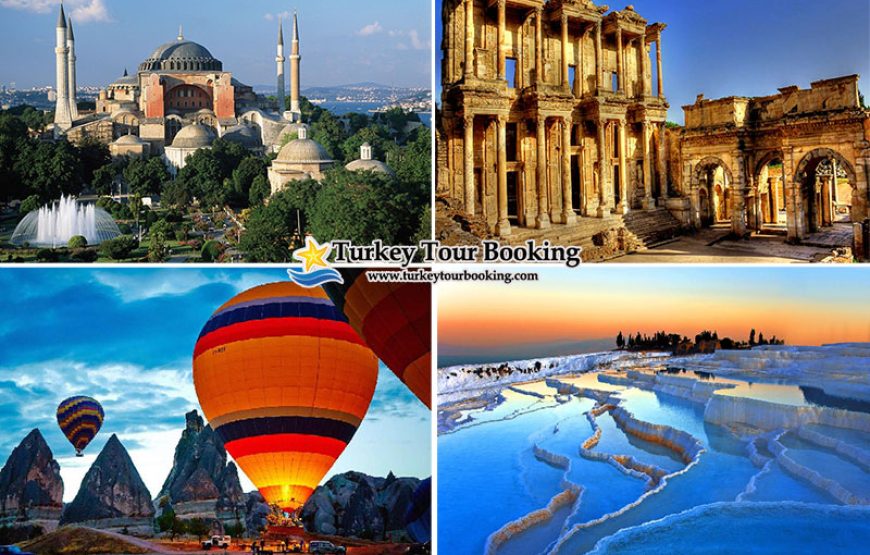
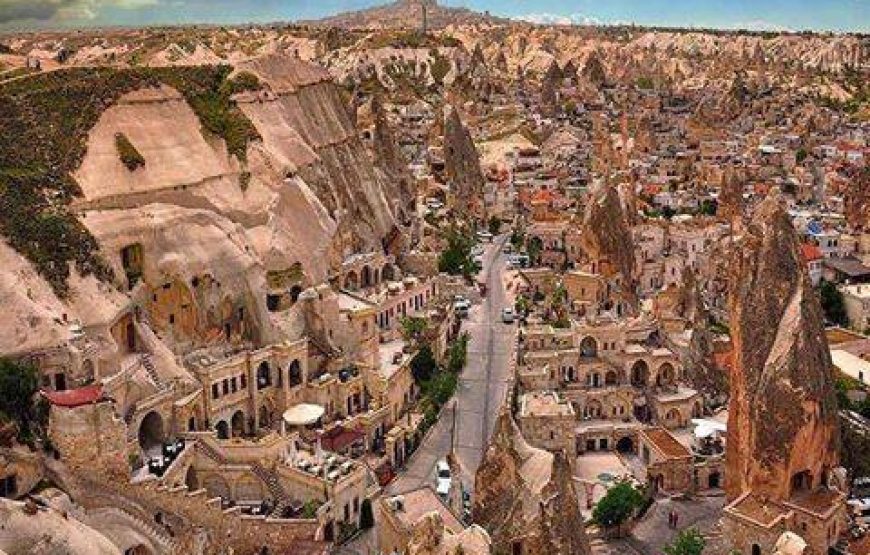
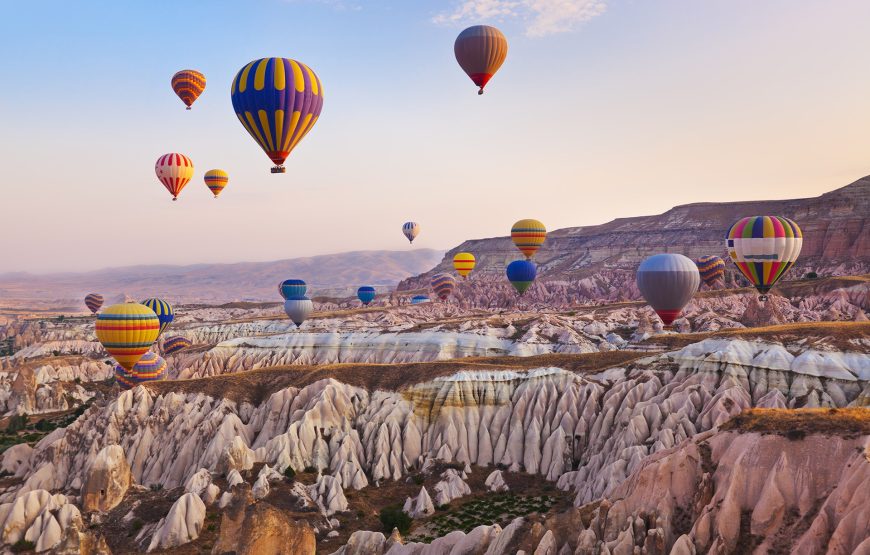
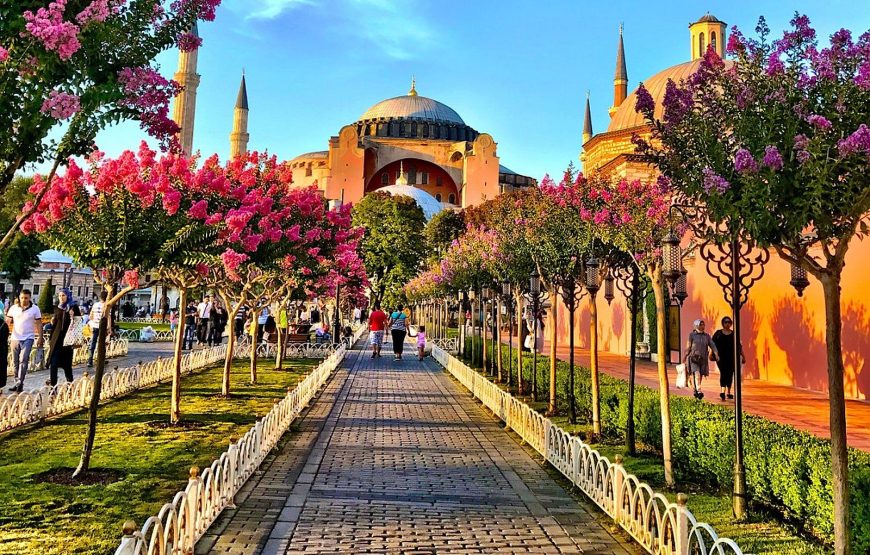
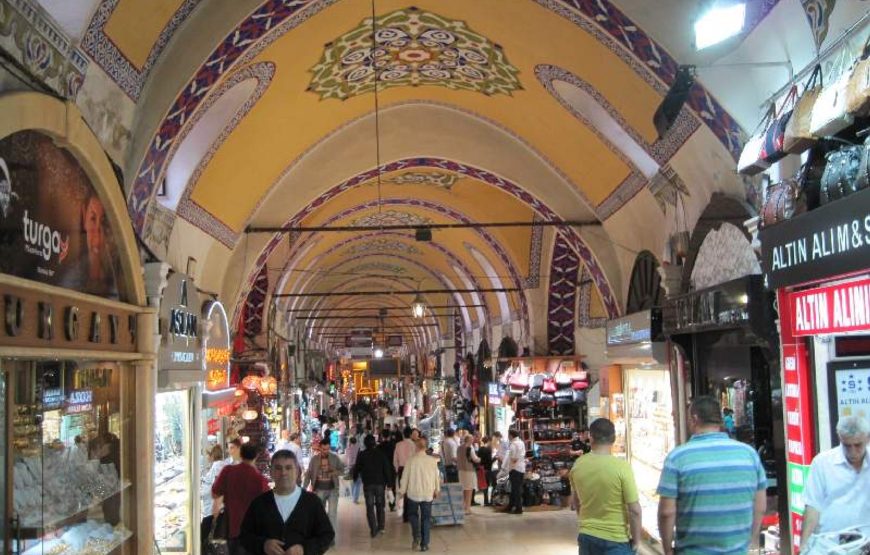
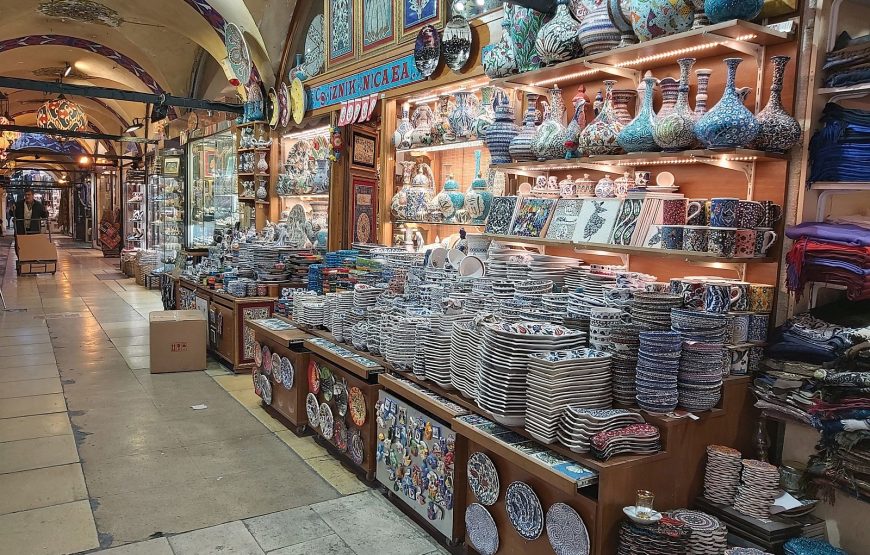
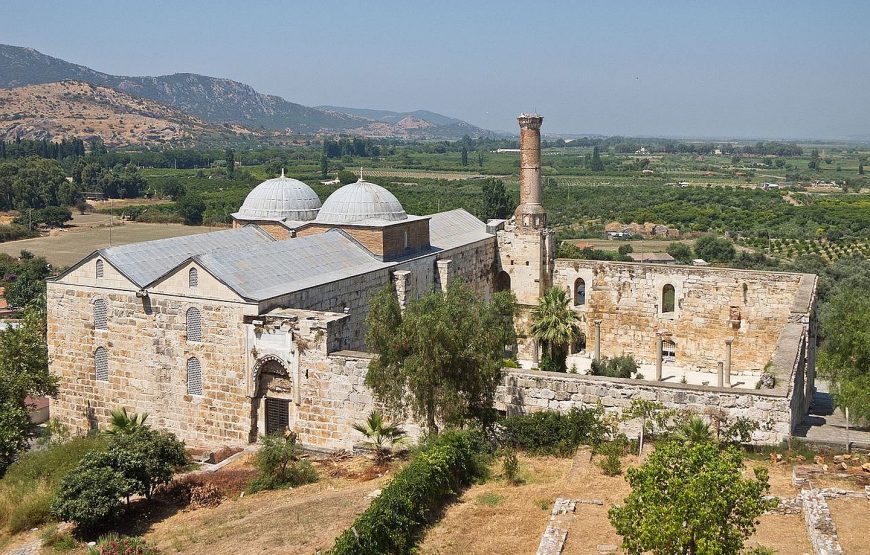
12 Days Turkey Tour Package includes Istanbul, Ephesus, Pamukkale, Antalya, and Cappadocia.
Arrive in Istanbul and meet our local team outside the airport arrival gate. After your welcome, we will transfer you comfortably to your hotel so you can check in, settle down, and ease into your first evening in the city.
Overnight stay in Istanbul.
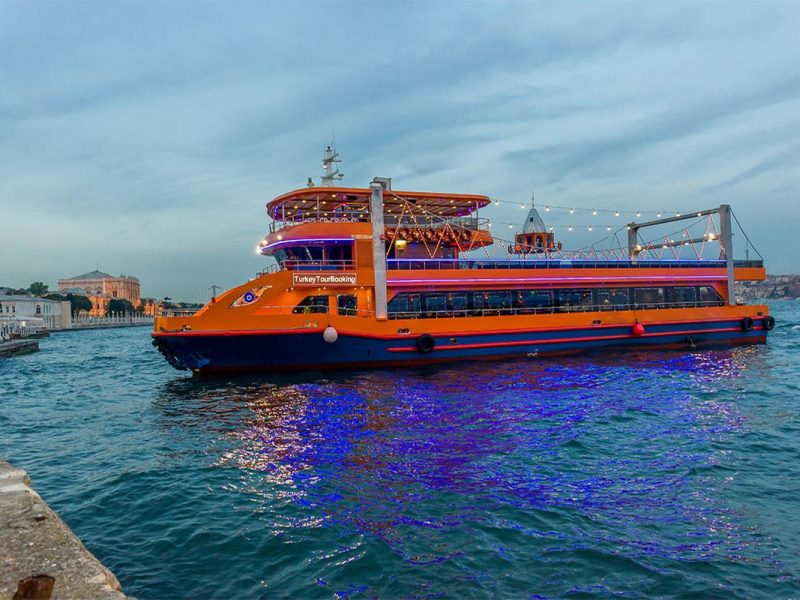
Day 2 ─ Istanbul Old City & Bosphorus Cruise
A full day stays free in Istanbul for your own pace before the Aegean section begins.
Overnight stay in Istanbul.
Meal: Breakfast
Early morning pick up from your hotel.
Flight from Istanbul to Izmir. (Flight time may change.)
08:00-08:30 am - Arrival at Izmir airport. (Arrival airport and time may change according to availability.)
Transfer to Ephesus Ancient City.
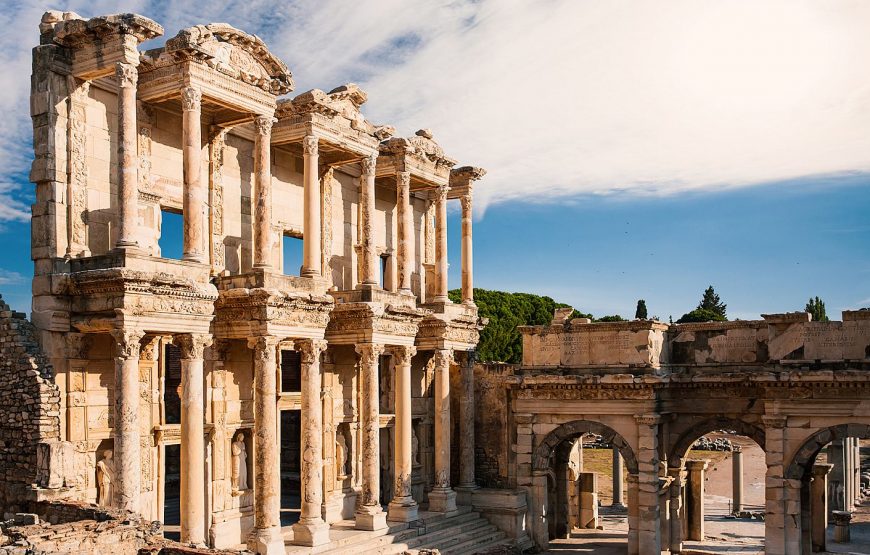
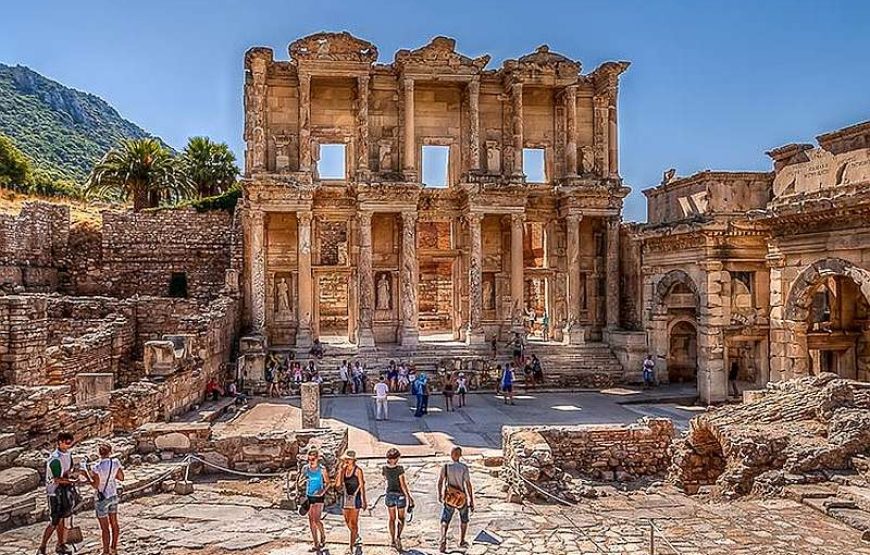
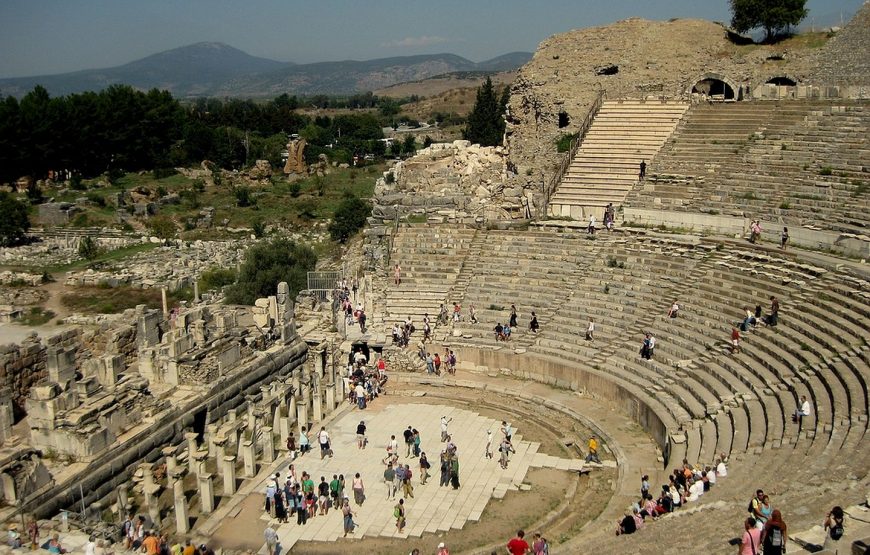
Ephesus Ancient City: Built during the height of the Roman Empire, Ephesus served as the capital of Roman Asia and one of the largest cities in the ancient world. Today, visiting this ancient city means walking through a remarkably preserved grid of streets, public baths, temples, and civic buildings. A guided tour gives you far more than sightseeing, it gives you context that makes the ruins come alive.
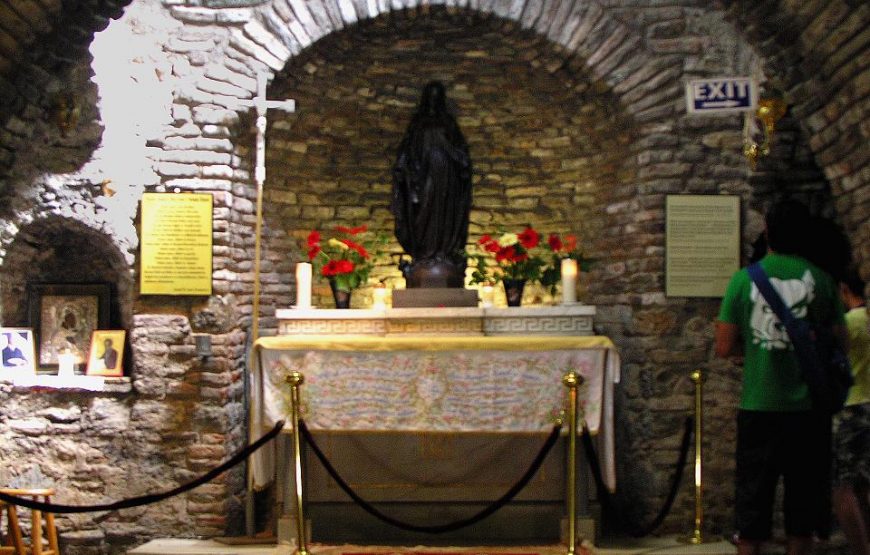
House of Virgin Mary: On warm mornings, the courtyard outside the House of Virgin Mary is filled with visitors lighting candles, reading from small prayer books, and sitting quietly in the shade of nearby trees. The atmosphere is respectful and unhurried in a way that larger pilgrimage sites sometimes struggle to maintain. Your guide steps back here and lets the place speak for itself.
Temple of Artemis: Ancient writers ranked the Temple of Artemis above all other wonders because of its combination of sheer size and artistic refinement, the carved column drums depicted mythological scenes with a precision and elegance that left ancient visitors speechless. None of that carving survives intact near Selcuk, but fragments recovered during excavation are displayed in the Ephesus Museum in nearby Selcuk town, giving you a chance to see what those columns actually looked like. A museum visit alongside the site makes the story complete. 16:00-16:30 - Ephesus tour ends.
Transfer to your hotel in Kusadasi/Selcuk.
Overnight stay in Kusadasi/Selcuk.
Meal: Breakfast & Lunch
08:00 - Pick up from your hotel.
Transfer to Pamukkale.
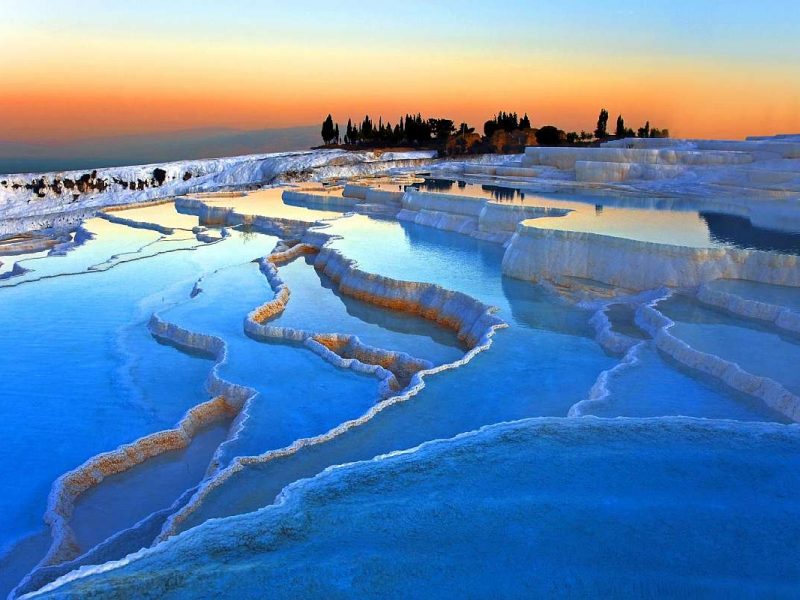
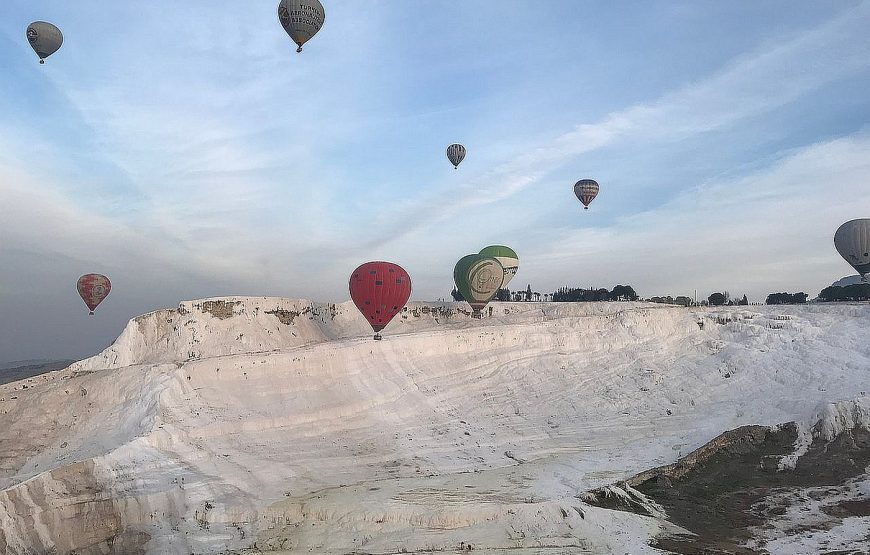
Pamukkale: A hillside turned completely white by thousands of years of thermal activity, that is Pamukkale in a single sentence. The mineral springs here carry dissolved calcium carbonate, which builds up layer by layer into smooth travertine terraces. UNESCO recognized the site's extraordinary combination of natural beauty and ancient history, and both rewards are still here waiting for you.
White Calcium Terraces: Thermal water carrying dissolved calcium carbonate has been overflowing this hillside since before the Romans built their city above it. Each time the water flows and cools, it deposits another paper-thin layer of white travertine. Multiply that by two thousand years and you get the extraordinary cascading terraces that make Pamukkale one of Turkey's most recognizable natural landmarks.
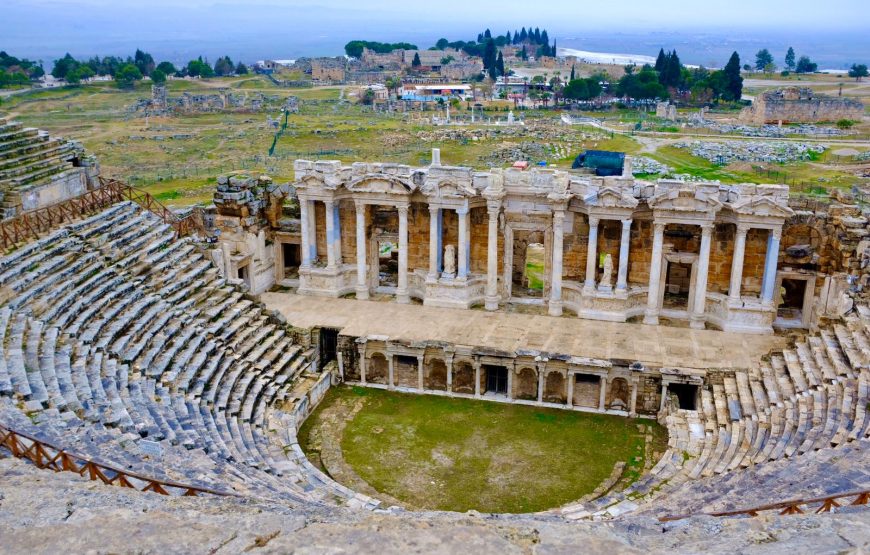
Hierapolis Ancient City: Hierapolis in the 2nd century AD under Roman rule was a city of marble baths, paved roads, and well-organized public spaces. Its theater was rebuilt and enlarged during the reign of Emperor Hadrian, and the facade still carries carved panels depicting mythological scenes. Above Pamukkale's travertine terraces, the scale of Roman construction that survives on this hilltop continues to surprise visitors who arrive expecting smaller ruins.
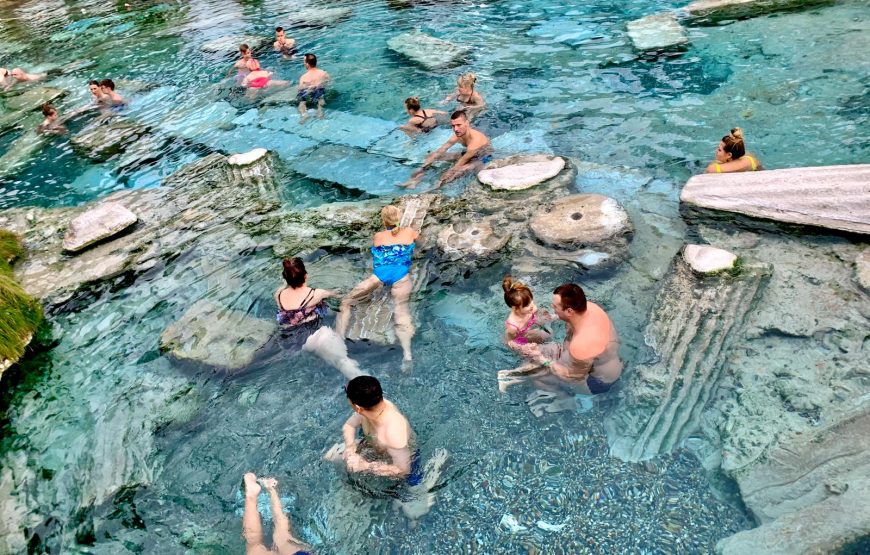
Cleopatra Antique Thermal Pool: Thermal water sourced from Pamukkale's ancient springs keeps Cleopatra Antique Thermal Pool at a comfortable 36 degrees every day of the year. Beneath the surface, visitors can see and touch original Roman marble columns that fell into the pool during a historical earthquake. Swimming here is optional and not included in the tour price, you pay at the poolside entrance separately if you decide to take a dip. 16:00 - Pamukkale tour ends.
Overnight stay in Antalya.
Meal: Breakfast
A free Mediterranean day lets you slow the pace after the west-coast transfer section.
Overnight stay in Antalya.
Meal: Breakfast
Another free day is built in so the itinerary stays realistic for travelers who do not want constant guided movement.
Overnight stay in Antalya.
Meal: Breakfast & Lunch
08:00 - Pick up from your hotel in Antalya for the full-day classical sites and waterfall program.
Perge: Perge was one of the most prosperous cities of ancient Pamphylia, with a colonnaded main street, a bath-gymnasium complex, and a stadium that could seat 12,000 spectators. The mountain gate, Hellenistic towers, and Roman agora are all accessible by foot, giving the site a walkable completeness that the more famous ruins nearby sometimes lack.
Aspendos Theatre: The Aspendos Theatre is the best-preserved Roman theatre in the world, still used today for opera and ballet performances during the Aspendos International Opera and Ballet Festival. Built under Marcus Aurelius in the 2nd century AD, its stage building stands nearly to its original height, with a decorated scaenae frons and a seating capacity of around 15,000.
Side Ancient City: Side combines a working Mediterranean resort town with substantial Roman ruins, a 2nd-century Temple of Apollo on a seafront promontory, a theatre that once doubled as an arena, and a colonnaded main street still traceable through the modern village. The juxtaposition of ancient columns with beach-facing restaurants makes Side one of the most atmospheric stops on Turkey's southern coast.
Duden Waterfall: The Lower Duden Waterfall drops directly into the Mediterranean Sea from a cliff face outside Antalya, making it one of the few waterfalls in Turkey where fresh water meets the open sea. Boat tours pass below the curtain of falling water, and the walk along the coastal cliff path above offers wide views of the turquoise bay.
17:30 - Tour ends.
Transfer back to your hotel in Antalya.
Overnight stay in Antalya.
Meal: Breakfast
Breakfast at the hotel and check-out from the hotel.
Fly from Antalya to Cappadocia and enjoy a free rest of the day after arrival.
The flight may be direct or connected via Istanbul depending on the travel date and flight availability. Airport transfers in both Antalya and Cappadocia are included.
Overnight stay in Cappadocia.
Meal: Breakfast & Lunch
09:30 - Pick up from your hotel.
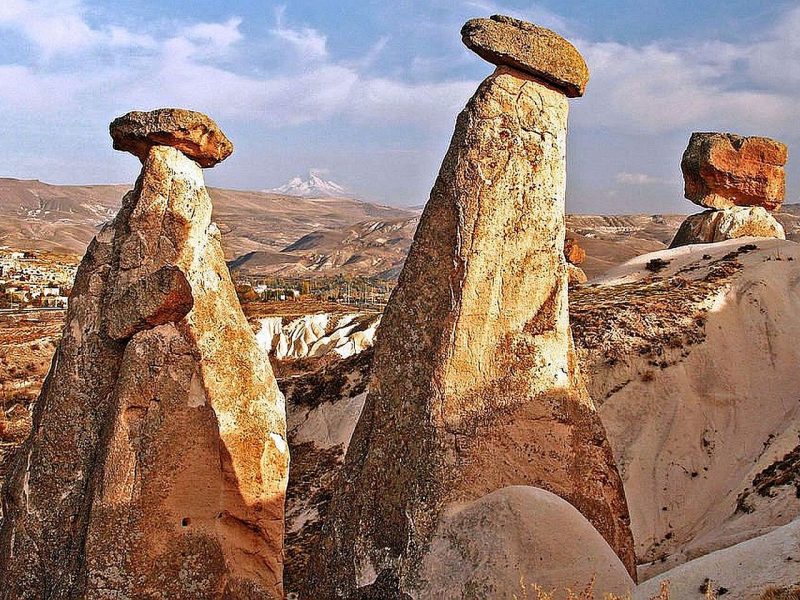
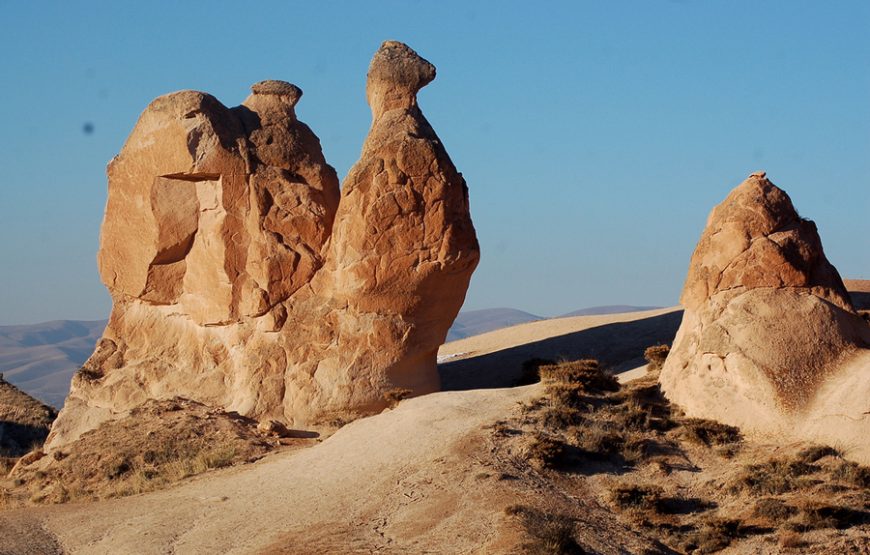
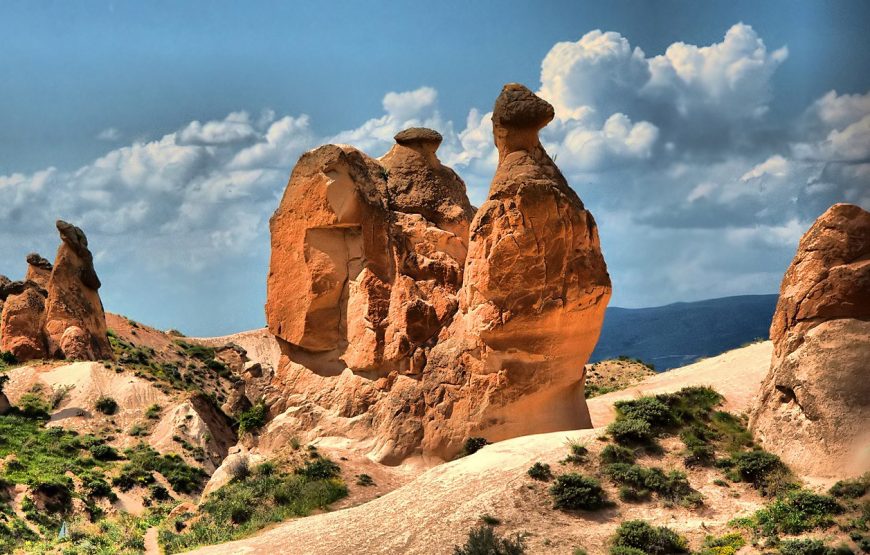
Devrent Valley (Pink Valley): Devrent Valley sits within the Goreme National Park, a UNESCO World Heritage Site, and its geological significance is recognized alongside the region's cultural heritage. Few travelers realize that the valley's rock formations are as scientifically important as they are visually spectacular.
Pasabag Open Air Museum: St. Simeon, to whom Pasabag's tallest formation is attributed, was a sixth-century ascetic monk who sought complete removal from society. His choice of Cappadocia's most extreme rock formation as a home was entirely consistent with the monastic philosophy of his era.
Avanos Pottery Workshop: No other town in Cappadocia has Avanos's concentrated tradition of working pottery workshops, and the combination of a living river source, a four-thousand-year artisan history, and continuing daily production makes it genuinely different from any pottery demonstration you might encounter elsewhere in Turkey.
Goreme Panoramic View: Photographs from Goreme Panoramic View consistently appear in travel publications, but the images rarely convey the full depth of the valley or the way formations layer behind each other at different distances. Standing there in person fills in the third dimension that even wide-angle photography cannot capture.
Zelve Open Air Museum: Zelve's three-valley structure means that different parts of the site have different characters: one valley is dominated by domestic cave homes, another by a dense monastic settlement, and a third by a more open arrangement with wider paths and larger cave openings. Moving between them changes the feeling of the site significantly.
Uchisar Castle (exterior view): Uchisar Castle and Goreme valley together explain Cappadocia's historical settlement pattern: the castle provided the high defensive position, and Goreme provided the dense cave-church community below. Both are visible simultaneously from the viewing terrace, representing two complementary strategies for living in the same volcanic landscape.
17:00 - Tour ends.
Transfer to your hotel.
Overnight stay in Cappadocia.
Meal: Breakfast & Lunch
09:30 - Pick up from your hotel.
Red Valley: Hidden cave openings appear at irregular intervals along Red Valley's cliff walls, some barely wide enough to enter and others opening into larger carved chambers. These spaces were likely used as storage or shelter by early inhabitants who made use of every accessible space in Cappadocia's soft rock landscape.
Rose Valley (Gulludere Valley): Rose Valley sits within the boundaries of the Goreme National Park and Ozkonak Air Museum, recognizing both its natural and cultural significance. Preservation efforts in Gulludere Valley focus on stabilizing rock church interiors to slow the deterioration of remaining frescoes exposed to humidity and light.
Cavusin Village: Cavusin's cliff communities maintained close cultural ties with larger Byzantine centers, and artistic conventions visible in its church frescoes align with decorative programs found in Constantinople and throughout the broader Byzantine world. Cappadocia's relative isolation from political instability during certain periods allowed local artistic traditions to develop and flourish with unusual continuity.
Pigeon Valley: Pigeon Valley's upper rim viewpoints offer some of Cappadocia's clearest open panoramas, with the landscape dropping away sharply on both sides of a narrow rock ridge. From these elevated points, you can see the relationship between Uchisar's rock castle, the Goreme valley, and the broader plateau that surrounds both communities.
Underground City: Stables for animals were carved into the upper levels of Cappadocia's underground city, with carved rings for tethering livestock and drainage channels cut into the floor still visible today. Keeping animals underground served two purposes: the heat generated by livestock bodies helped warm the upper chambers, and their presence prevented enemies from using the animals as a food source.
17:00 - Cappadocia tour ends.
Transfer to Cappadocia airport.
21:30 - Evening flight to Istanbul. (Flight time may change.)
23:00 - Arrival in Istanbul. (Arrival airport and time may change according to availability.)
Transfer to your hotel in Istanbul.
Overnight stay in Istanbul.
Meal: Breakfast
Transfer from your hotel to the airport according to your international departure time. The package ends here.